5 Revolutionary Steps to Understanding LED Display Technology : The Expert Guide
Published: 21 Apr 2025
LED Display Technology
Here’s something most display manufacturers won’t tell you: while everyone’s been focusing on OLED and QLED, traditional LED display technology has been quietly evolving into something extraordinary. Unlike projection systems that struggle with ambient light or plasma displays that faded into obscurity, LED technology has consistently adapted and improved, becoming the backbone of everything from your smartphone to massive stadium screens.
What makes LED displays truly unique is their incredible versatility – they can be microscopic enough to fit in a smartwatch or massive enough to cover skyscrapers, all while delivering stunning brightness and color accuracy that other technologies struggle to match. At www.ledscreentechnology.com, we’ve been testing and reviewing display technologies for years, and what we’ve learned about modern LED technology will completely change how you think about displays
LED Display Technology : Illuminating the Future of Visual Innovation
From vibrant billboards to energy-efficient home lighting, LED(Light Emitting Diode) technology has revolutionized how we interact with light and displays. This guide dives deep into LED display technology, exploring its role in advanced display systems, the science of semiconductor lighting, and the magic of electro-luminescence in LEDs. Let’s light up the details of led display materials
Understanding LED Technology: The Science Behind the Glow 🔬
What is LED Display Technology?
LEDs are these cool little semiconductor bits that light up when you run electricity through them. Unlike those old-fashioned bulbs, they create light through this neat process called electroluminescence basically, electrons and electron holes get together and give off energy that turns into light. That’s why LEDs are so efficient, last forever, and can be used in all ways!
How Do LEDs Work? 🤔
- Semiconductor Structure: LEDs consist of layers of doped semiconductor materials (typically gallium nitride or gallium arsenide).
- Electroluminescence in LEDs: When voltage is applied, electrons move across the semiconductor, creating light without generating excess heat.
- Color Production: By adjusting semiconductor materials, LEDs emit specific wavelengths (colors). For example, blue LEDs use indium gallium nitride.
🌟 Fun Fact: The 2014 Nobel Prize in Physics was awarded for the invention of efficient blue LEDs, which enabled white LED lighting!
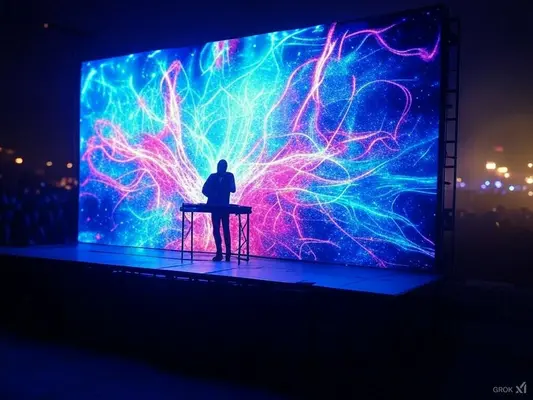
How LED Technology Actually Works: The Science Behind the Magic
Understanding modern LED displays requires looking past the marketing hype and understanding the fundamental technology that makes everything possible.
The Basic Principles of Light Emitting Diodes
• LED technology is based on semiconductors that emit light when electrical current passes through them
• Unlike traditional bulbs that use filaments, LEDs use electroluminescence to produce light more efficiently
• The color of the light is determined by the energy band gap of the semiconductor material used
• Red, green, and blue LEDs are combined in various intensities to create millions of possible colors
• Modern LEDs can produce incredibly pure and saturated colors that cover wide color gamuts
• The efficiency of LEDs has improved dramatically, with modern units producing more light per watt
• LED lifespan has increased to 100,000 hours or more due to material and manufacturing improvements
• Thermal management is crucial as excess heat can reduce LED lifespan and color accuracy
• The tiny size of modern LEDs allows for incredibly high pixel densities in displays
• This fundamental technology enables everything from smartphone screens to massive digital billboards
Types of LED Display Technology and Their Applications
• Direct-view LED Display Technology use thousands of individual LEDs to create images without backlights
• LCD displays with LED backlights use LEDs behind liquid crystal panels to illuminate images
• MicroLED technology takes miniaturization to extreme levels with microscopic individual LEDs
• OLED displays use organic LEDs that can be printed on flexible substrates
• Mini-LED technology bridges the gap between traditional LED and MicroLED
• Each technology has specific applications where it performs best
• Cost considerations often determine which technology is appropriate for different uses
• Size requirements and viewing distances influence technology selection
• Environmental factors like sunlight exposure affect technology choices
• Understanding these differences helps consumers make informed purchasing decisions
Color Reproduction and Image Quality
• LED Display Technology can achieve wider color gamuts than many other display technologies
• Color accuracy depends on the quality of LEDs and calibration processes
• High-end LED displays can cover 95%+ of the DCI-P3 color space
• Bit depth determines how many color variations can be displayed smoothly
• Refresh rates affect motion handling and video performance
• Contrast ratios are determined by individual LED control and black levels
• Viewing angles have improved significantly with modern LED technology
• Image processing algorithms significantly enhance final picture quality
• HDR capabilities depend on both peak brightness and contrast performance
• Professional calibration can optimize LED displays for specific environments
Energy Efficiency and Environmental Impact
• Modern LED Display Technology are significantly more energy-efficient than previous technologies
• Energy consumption varies based on content being displayed and brightness settings
• LED Display Technology contains fewer hazardous materials than some older display technologies
• Long lifespan reduces electronic waste compared to shorter-lived technologies
• Recyclability continues to improve as manufacturers adopt circular economy principles
• Power management features help reduce energy consumption during operation
• Heat generation affects both energy efficiency and cooling requirements
• Size and resolution impact total power consumption significantly
• New manufacturing processes reduce environmental impact during production
• Energy Star ratings and other certifications help identify efficient models
Technical Specifications and What They Mean
• Resolution refers to the number of pixels and affects image sharpness
• Pixel pitch determines the optimal viewing distance for displays
• Brightness measured in nits determines visibility in different lighting conditions
• Contrast ratio affects how deep blacks appear and overall image pop
• Refresh rate impacts motion smoothness and video performance
• Response time affects how quickly pixels can change color
• Color depth determines how many colors can be displayed
• Input lag affects responsiveness for gaming and interactive applications
• Viewing angles determine how well the image holds up from the side
• Understanding these specs helps consumers compare products effectively
LED vs OLED: The Real-World Comparison
The choice between LED and OLED involves understanding their fundamental differences and how they affect real-world performance.
Picture Quality Differences
• LED displays typically achieve higher peak brightness than OLED panels
• OLED technology offers perfect black levels since pixels can turn off completely
• LED displays have improved contrast through local dimming technology
• Color volume tends to be better on LED displays at high brightness levels
• Viewing angles are generally better on OLED displays
• Motion handling varies between technologies and specific implementations
• Image retention affects OLED but not traditional LED displays
• Both technologies can deliver excellent picture quality in different ways
• Content type affects which technology performs better
• Personal preference plays a significant role in technology preference
Durability and Longevity Considerations
• LED Display Technology generally have longer lifespans than OLED panels
• OLED displays can suffer from burn-in with static content
• LED technology is less susceptible to image retention issues
• Brightness degradation occurs differently between the technologies
• Repair costs and complexity vary between the technologies
• Environmental factors affect each technology differently
• Usage patterns should influence technology selection
• Warranty terms often reflect expected longevity differences
• Technological improvements continue to address durability concerns
• Total cost of ownership should include longevity considerations
Price and Value Proposition
• LED Display Technology generally offers better value at most price points
• OLED commands a premium for its specific advantages
• Prices for both technologies have been decreasing over time
• Feature sets vary significantly within each technology category
• Mid-range LED displays often outperform entry-level OLED models
• High-end implementations of both technologies offer exceptional performance
• Market segmentation creates overlap in pricing and performance
• Technology improvements make older comparisons less relevant
• Specific use cases may justify premium pricing for either technology
• Understanding value requires looking beyond basic technology labels
Choosing the RightLED LED Display Technology : A Practical Guide
Selecting the perfect LED display involves balancing multiple factors based on your specific needs and environment.
Understanding Your Needs and Environment
• Room lighting conditions significantly affect display requirements
• Viewing distance determines optimal screen size and resolution
• Content type influences technology and feature preferences
• Multiple viewers versus single-user setups affect viewing angle requirements
• Ambient light conditions impact brightness needs
• Room size and layout affect optimal screen size
• Usage patterns determine durability requirements
• Aesthetic considerations influence design choices
• Future-proofing needs affect technology selection
• Budget constraints help narrow options effectively
Key Specifications That Actually Matter
• Brightness requirements depend on ambient light conditions
• Resolution needs are determined by viewing distance
• Refresh rate matters most for gaming and fast motion content
• Color accuracy requirements vary by use case
• Input lag is crucial for gaming applications
• Smart features should match your ecosystem preferences
• Connectivity options need to match your sources
• Audio capabilities may require external solutions
• Calibration options affect out-of-the-box performance
• Warranty terms provide peace of mind
Installation and Setup Considerations
• Professional installation ensures optimal performance
• Calibration improves picture quality significantly
• Proper mounting ensures safety and optimal viewing
• Cable management maintains clean aesthetics
• Environmental factors affect performance and longevity
• Maintenance requirements vary by technology
• Future serviceability should be considered
• Integration with existing systems matters
• Control systems affect daily usability
• Future expansion possibilities are worth considering
The Future of LED Display Technology
LED technology continues to evolve rapidly, with several exciting developments on the horizon.
Emerging Technologies and Innovations
• MicroLED technology promises OLED-like performance with LED benefits
• Mini-LED backlights bring better contrast to LCD displays
• Flexible and transparent displays enable new form factors
• Improved manufacturing processes reduce costs and improve quality
• Higher resolutions become available at lower price points
• Better HDR implementation enhances dynamic range
• Improved color reproduction expands creative possibilities
• Enhanced connectivity enables better integration
• Smart features become more sophisticated and useful
• Sustainability improvements reduce environmental impact
Market Trends and Consumer Adoption
• Prices continue to decrease while quality improves
• Larger sizes become more affordable and common
• Higher resolutions become standard across price points
• HDR support expands to more content and devices
• Gaming features become more important differentiators
• Smart home integration becomes more seamless
• Professional features trickle down to consumer products
• Installation and calibration services become more accessible
• Content availability drives technology adoption
• Consumer education improves purchasing decisions
Potential Applications and Use Cases
• Home entertainment continues to drive innovation
• Commercial applications expand with lower costs
• Digital signage becomes more sophisticated
• Gaming experiences continue to improve
• Professional content creation benefits from better displays
• Educational applications expand with better technology
• Healthcare applications benefit from improved displays
• Automotive displays incorporate newer technology
• Wearable technology uses advanced display solutions
• Emerging applications continue to be developed
Conclusion : Making the Right Choice for Your Needs
Choosing the right LED display technology involves understanding your specific needs, environment, and budget. While OLED offers perfect blacks and excellent viewing angles, modern LED technology provides superior brightness, better value, and greater reliability for most users. The best choice depends on your specific situation – whether you need maximum brightness for a sunny room, perfect blacks for dark room viewing, or specific features for gaming or professional use. At www.ledscreentechnology.com, we recommend considering all factors rather than focusing on any single specification. Remember that technology continues to improve rapidly, and today’s limitations may be solved in tomorrow’s products. The most important thing is choosing a display that meets your needs today while providing good value for your investment.
FAQs About LED Display Technology
LED displays use a backlight system with liquid crystal pixels, while OLED displays have self-emissive pixels that produce their own light. LED displays generally offer higher brightness and better value, while OLED provides perfect blacks and better viewing angles. The choice depends on your specific needs, environment, and budget considerations.
Quality LED displays can last 100,000 hours or more, which translates to over 10 years of normal use. The actual lifespan depends on usage patterns, environmental conditions, and quality of components. Modern LEDs maintain their brightness and color accuracy much longer than older technologies.
Yes, many modern LED displays offer excellent gaming performance with high refresh rates, low input lag, and good motion handling. Features like variable refresh rate (VRR) and auto low latency mode (ALLM) make them suitable for both console and PC gaming. Always check specific gaming features when choosing a display for gaming.
No, traditional LED displays don’t suffer from burn-in like OLED displays. The liquid crystal pixels don’t degrade in the same way as organic materials in OLED panels. This makes LED displays better suited for applications with static content or extended usage periods.
The ideal size depends on your viewing distance and room layout. A general rule is that your viewing distance should be about 1.5 to 2.5 times the diagonal screen size. For a typical living room, 55-65 inches is often ideal, but larger sizes become more affordable each year.
Resolution importance depends on your viewing distance and content sources. For typical living room viewing distances, 4K resolution provides noticeable improvement over 1080p. As content increasingly becomes available in 4K and beyond, higher resolutions provide better future-proofing.
While LED displays work well out of the box, professional calibration can optimize performance for your specific environment. Many displays offer preset modes that work well for most users. For critical applications like photo editing, calibration becomes more important.
Higher-priced displays often offer better build quality, advanced features, and improved performance. However, the law of diminishing returns applies – mid-range displays often offer the best value. Consider which features actually matter for your usage before paying premiums.
Modern LED displays are significantly more energy-efficient than older technologies like plasma. Energy consumption varies based on brightness settings and content being displayed. Energy Star ratings can help identify efficient models that save on electricity costs.
Most electronics retailers have display areas where you can compare different models. Specialty audio/video stores often have better demonstration setups. Always view displays in conditions similar to your intended environment, as store lighting can be misleading.






- Be Respectful
- Stay Relevant
- Stay Positive
- True Feedback
- Encourage Discussion
- Avoid Spamming
- No Fake News
- Don't Copy-Paste
- No Personal Attacks
- Be Respectful
- Stay Relevant
- Stay Positive
- True Feedback
- Encourage Discussion
- Avoid Spamming
- No Fake News
- Don't Copy-Paste
- No Personal Attacks
